How CircuitPaw got built
One idea, three kinds of board, a chip program with safety rules, and a design studio I wrote to make all of it repeatable.
01 / the idea
The art is the board
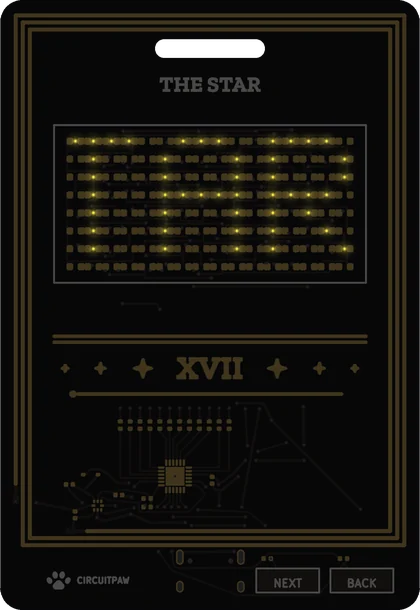
Your character printed on a real circuit board, with little lights that play when you press a pad and a phone tap that opens your page.
02 / three boards
A card, a tag and a badge
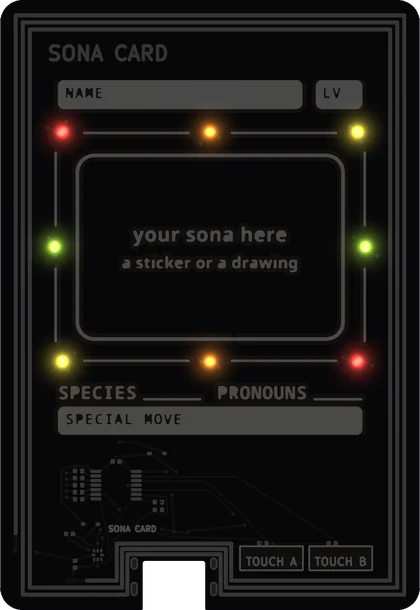
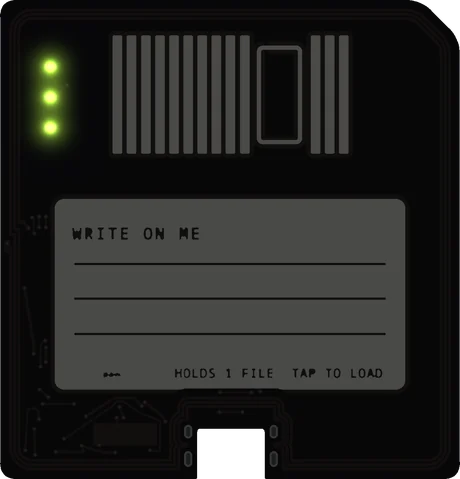
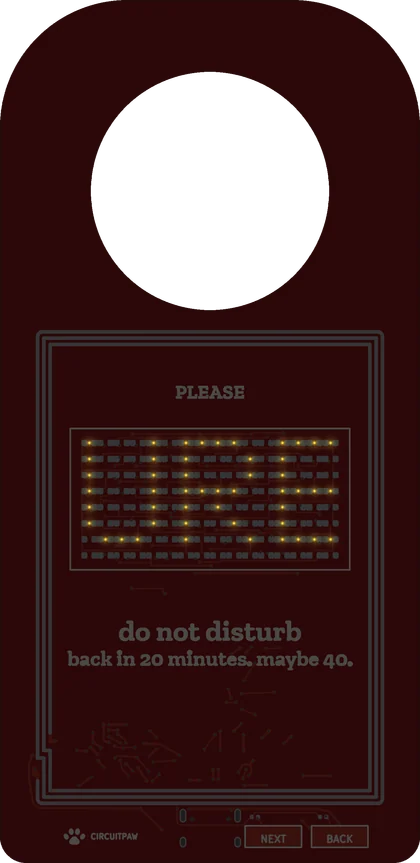
A business card with up to eight lights, tags cut in many shapes, and a badge with a 16 by 8 grid: 128 lights at 16 brightness levels each.
03 / the electronics
One small chip doing a lot
One ATtiny1624 runs the whole board. The lights are charlieplexed, so a handful of pins drives up to 128 LEDs. The pads are capacitive touch, an NFC tag answers the phone tap, and every chip is flashed over UPDI pads I put on the board.
04 / card studio
A design studio I wrote
Upload art, pick how it is printed, place lights to the millimeter, and every change lands in a time machine that can roll back. Studio turns a drawing into the files a board house needs, with 3D proofs. More than 150 designs live in it today.
05 / rules in the engine
Safety the firmware cannot skip
Program changes run on a simulated chip before Studio will keep them. The engine caps brightness and pin current, counts the CPU cycles in every frame, and refuses any pattern that flashes a patch of lights more than three times a second. A build is not finished until the board checks pass: flashing pads, part polarity and a first article checklist.
06 / an agent that helps
AI on the bench, people at the gate
Studio has its own tool server, so an AI agent can design a card with me. Signing off a design is a person’s step, and nothing in Studio can order or pay.
07 / launch
circuitpaw.com launch
The site goes live Friday, November 27. The builds keep going up on Instagram, TikTok and YouTube as they happen.